
By Nick Granger, Enigma Rooms
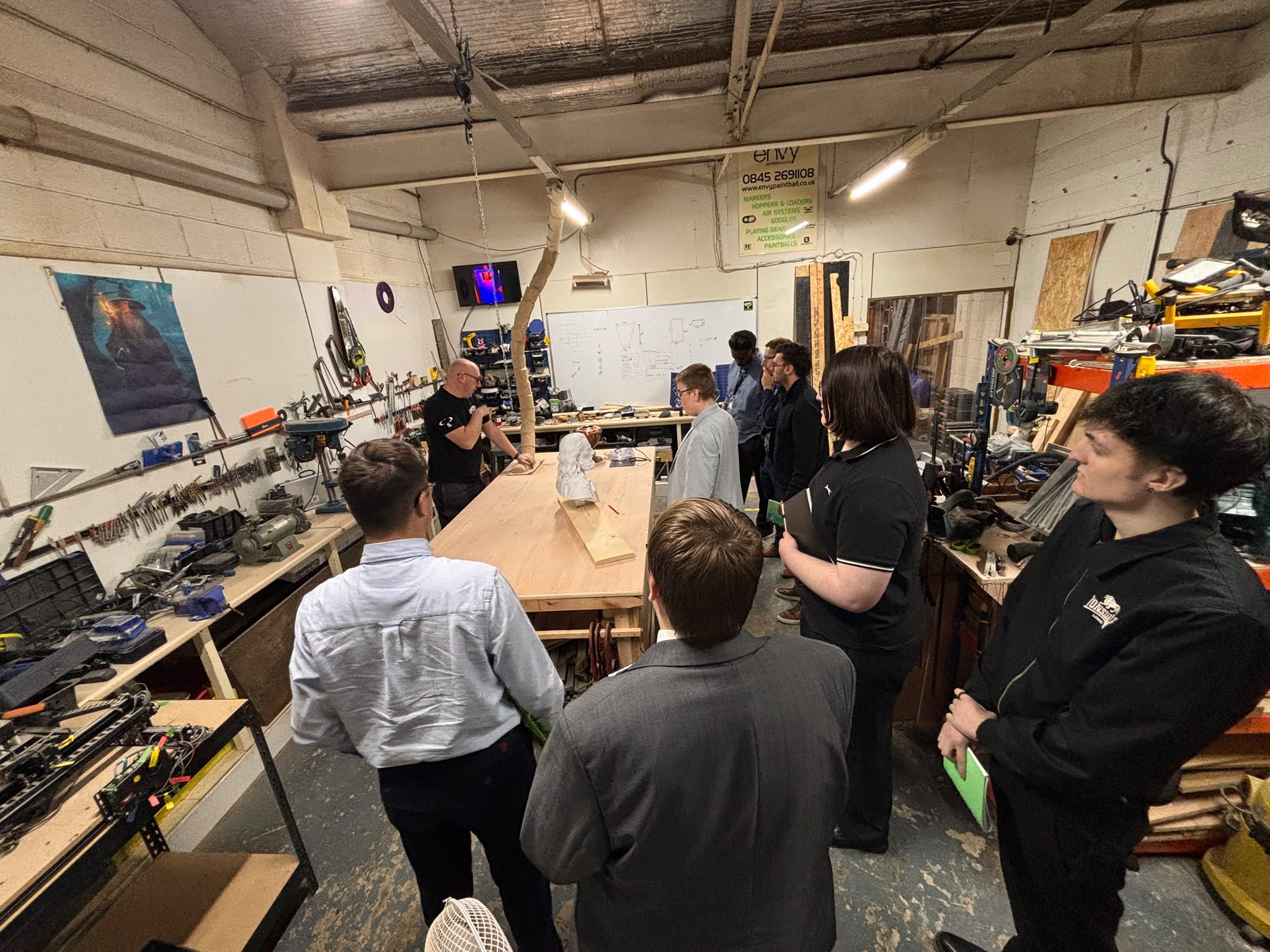
On 29 September 2026, students from Harrison College in Doncaster visited the Enigma Rooms workshop as their escape room project continued. With their own games taking shape, they wanted to know how we create our escape room props and scenery, and how we make our experiences more immersive.
It was a chance to see the making side of Enigma: the workbenches, tools, materials and unfinished pieces behind the worlds our guests step into.
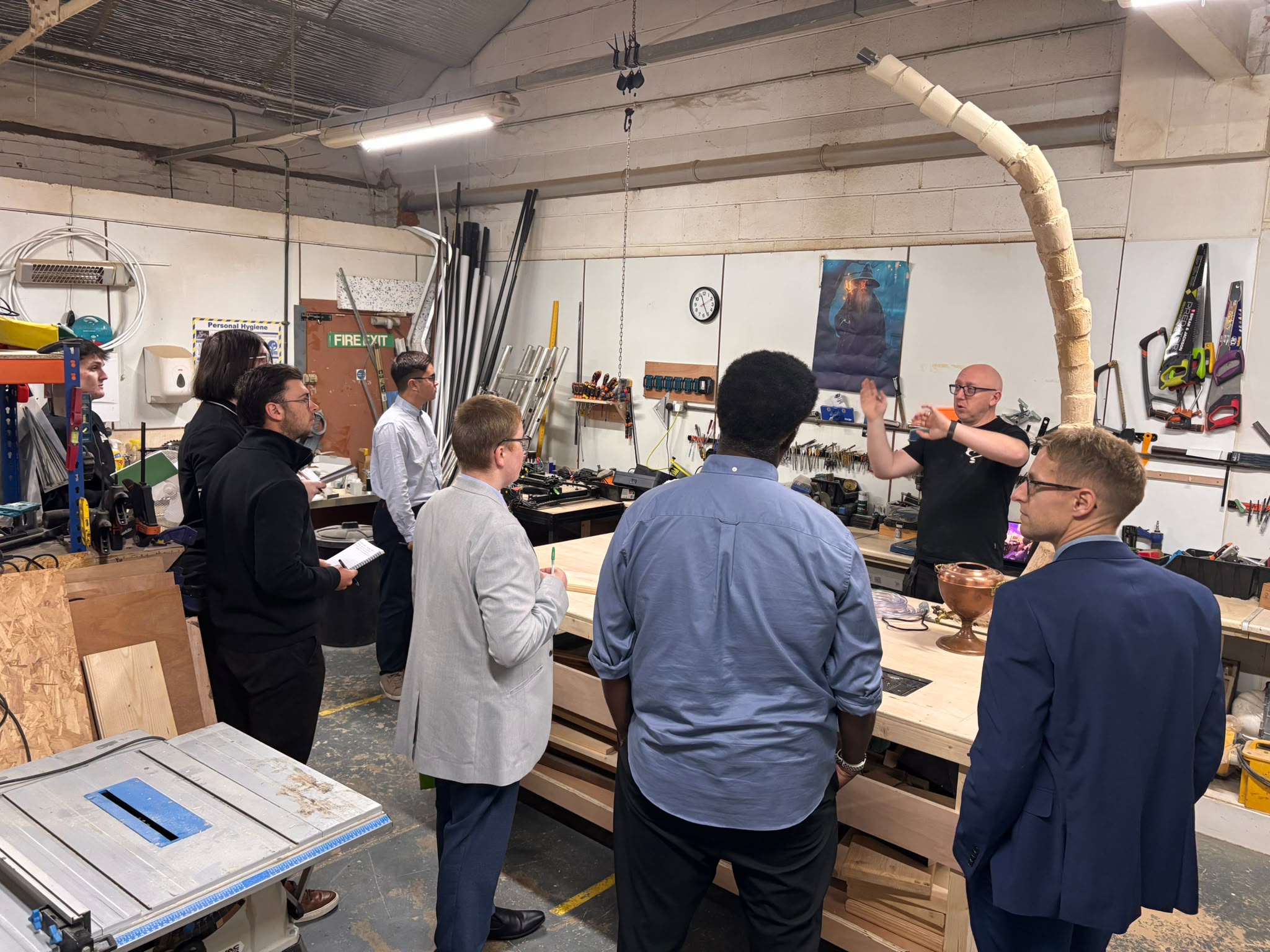
From playing escape rooms to creating their own
The workshop visit follows the students’ first escape room design visit to Enigma Rooms Doncaster. They played our games, watched Danny demonstrate how a room is reset, and joined Nick for a Q&A about designing, building and operating escape room experiences.
Each stage offers a different perspective. Playing a room lets you experience the story and puzzles as a guest. Seeing a reset reveals the work needed to prepare it for another team. Visiting the workshop brings the physical design into view.
With Harrison College’s project now in full swing, the students brought questions that connected their own ideas with the practical business of making an experience.
How escape room props and scenery help tell the story
A finished escape room can feel a long way from the workshop where its parts begin. Guests encounter a themed setting; behind it are materials, tools and decisions about how everything will look and work together.
Props and scenery help establish that setting. A prop might give players something to investigate or interact with. Scenery helps create a sense of place, giving the objects and challenges around them a believable context.
For us, the design question is what each piece contributes to the experience. Does it fit the story? Does it make sense in that space? How will players encounter it? Thinking about those questions connects the practical work of making something with its purpose in the game.
That connection was at the heart of the students’ interest in how we create our props and scenery.
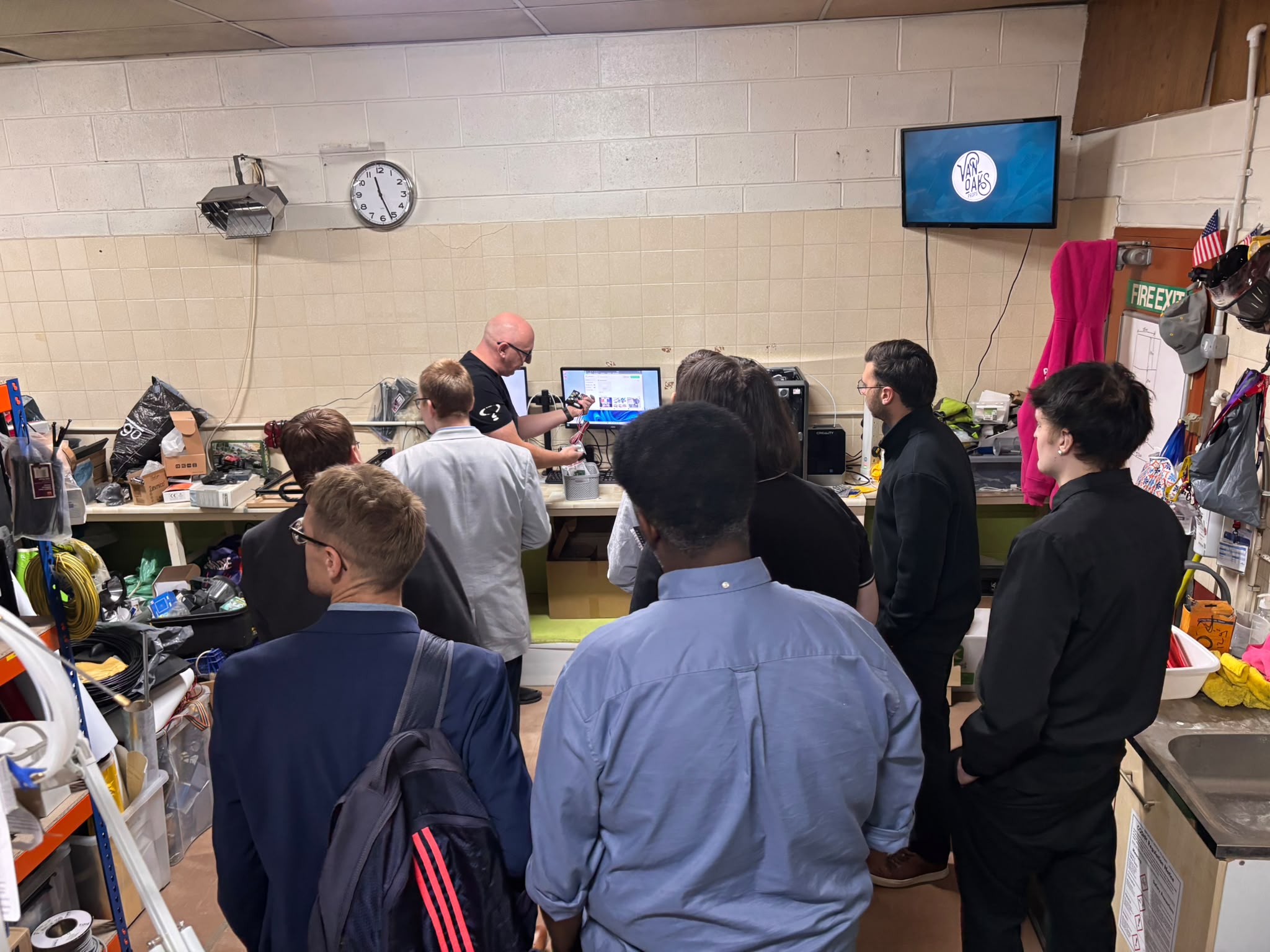
What makes an escape room more immersive?
The students also asked how we make our experiences more immersive. It’s a question that reaches across the whole design of a room.
For us, immersion comes from the setting, story, props and player actions feeling connected. The surroundings help establish where you are. The story gives your team a reason to be there. The things you discover and do give you a part to play.
An object can look convincing and still feel out of place if it has little connection to the world around it. Equally, a simple detail can make a difference when it supports the story and gives players something meaningful to notice.
For anyone developing an escape room, it helps to consider the whole journey: what players see when they arrive, what they understand about their task, and how each discovery carries them through the experience.
A project bringing creative and practical thinking together
Creating an escape room gives a group plenty of decisions to work through together: the theme, the story, the challenges and the physical space in which the game will happen.
The Harrison College project brings those questions into a shared piece of work. This visit connected the students’ developing ideas with a look inside a working escape room workshop, building on what they had already experienced as players.
Thank you to everyone from Harrison College who joined us. We look forward to seeing how your games develop.
Planning an escape room project for your school or college?
If your school, college or organisation is exploring an escape room design project, get in touch with Enigma Rooms to discuss what you would like to create.
Email hello@enigmarooms.co.uk with your audience, approximate group size, preferred timing and project aims. We can talk through how we may be able to help.
You can also explore our bespoke games and experiences for organisations, or browse escape rooms in Doncaster to discover the experiences our team creates.